By Sue Healey, Tillsonburg Horticultural Society
I’m always a bit anxious at the end of July. The last hot and heavy days of the month are saturated with colour; blue and yellow, deep coral, apricot and red. So much colour that I fear there will be nothing left for August. What could follow the riot of roses, bellflower and iris? I count the buds on the daylilies, estimating the last day of bloom, adjusting my schedule to ensure I witness it. I scan the garden for what is to come and fret there isn’t enough, or what is left to bloom will pale in comparison. But, come August, I am always relieved to see that the show continues even if it’s in a gentler tone. There is still plenty of colour to be seen in this final phase of the summer.
Perennials and annuals with late season bloom offer us not only colour for the garden but food and shelter for the host of creatures that inhabit it. There are a range of easy to grow specimens to extend the season and often, display attributes well beyond bloom time.
In my own gardens, the rich blue of Balloon flower (Platycodongrandifloras) still lingers into mid August. Among them, the last of the Crocosmia wink out like sparks in the evening sky. Beyond that fading vignette is Russian sage (Perovskia atriplicifolia), it’s ghostly spires covered in a mist of smoky blue blossoms and finely cut, silvery leaves. This shrubby perennial thrives in the hot, dry summer we’ve had this year. Native bees and wasps and other little things come to drink at the tiny cups offered over July and August. I leave it all winter, those stiff, bleached branches snag the snow and the light and give me a reason to go out when it’s cold.
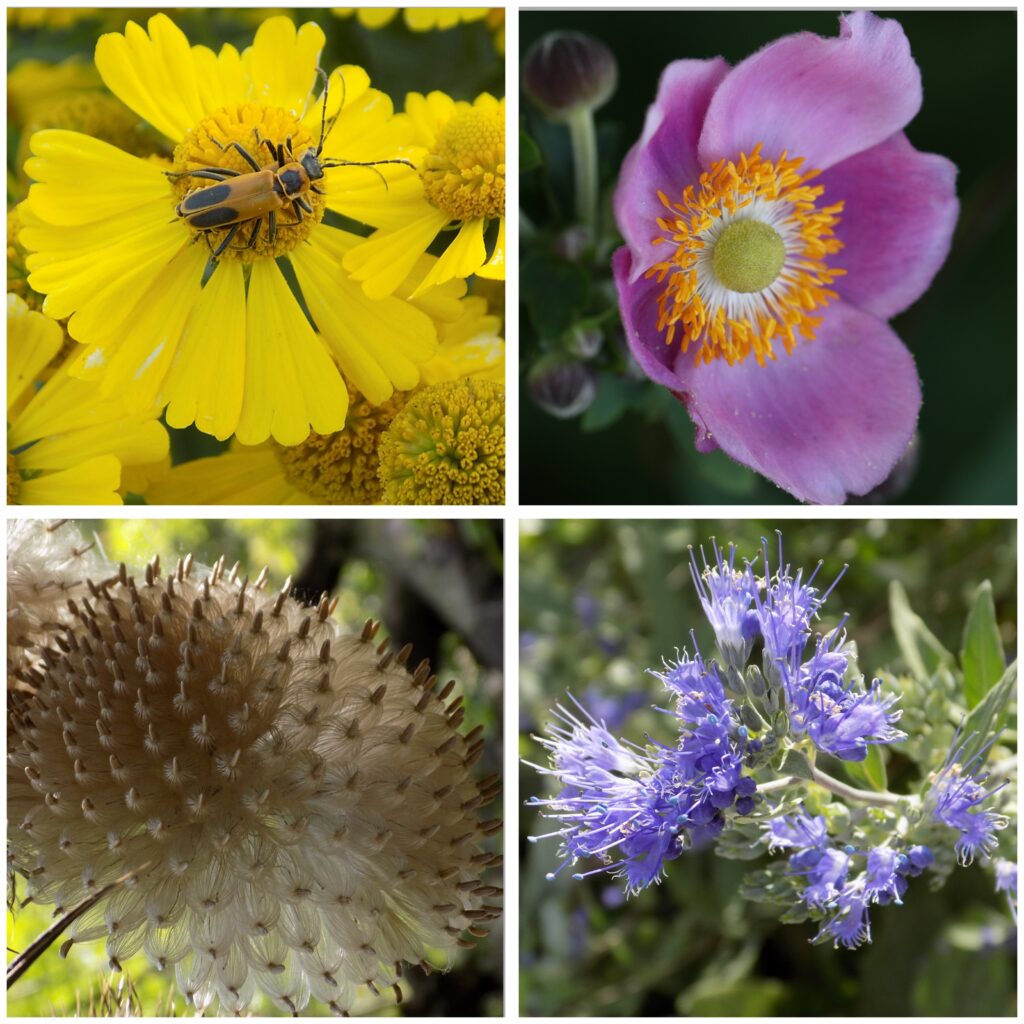
Across the way, in an echo of colour is sea lavender (Limoniumlatifolium). August is it’s peak bloom time and it does so with abandon. Large, multibranched stems hold tiny flowers, by the hundreds and open in slow succession over the weeks. Blue black sand wasps favour this late bloomer and make the perfect accent to the purple or white flowers. Deep rooted, Limonium is well suited to my dry, sandy soil and can even withstand the salty conditions of seaside gardens. In my landlocked yard, this perennial blooms until late summer, drying easily for winter arrangements. A self seeder and tenacious once established, it should be carefully deadheaded when grown in sandy soil.
Against all that blue is lovely Helenium (Helenium autumnale) in buttery yellows, bronze, or copper. Often maligned by it’s common name of sneezeweed; this member of the Aster family blooms at the same time as the allergy inducing Ragweed. A clump forming perennial that likes moist, fertile ground, the extra coddling that Helenium needs to survive my sandy soil is well worth the trouble. Sunny flowers bloom atop sturdy, waist-high stems in late summer. Petals, pleated and crimped, arearrayed in single or double rows around a velvet brown dome. A generous clump of these late-blooming perennials, in a sumptuous mixture of colours, becomes a magnet for butterflies and other pollinators seeking nectar as the season progresses. Helenium does best with frequent division and an annual topping of composted manure to ensure good health.
In the oldest of my beds August belongs to the Grape-leaf Anemone (A. tomentosa). There she reigns supreme, just at the edge of the witch hazel. Her pale pink, single blooms float among the lower branches, giving the tree a second flowering. I grow a variety of Anemones from this large and diverse genus, from spring blooms to this last, hardy specimen. A. tomentosa is impressive from start to finish. Bold and vigorous, with three-part leaves and sturdy stalks, this mid-to-back of the borderperennial is long lived once established. Buds, covered in deep pink corduroy, dangle on stately stems splitting and curling to reveal, silken petals and lime green centres. The flowers come in shades of white to deep pink and are a favourite of the local bumblebees. The August air is filled with their joyful buzzing as they scramble through the golden tipped anthers. The last of the Anemone show is late in the year and may be my favourite part. When the seed heads dry, those tightly packed centres begin to give way. They spool out in the most dramatic way, like art unfurling before our eyes. I have spent long hours bent in trying to capture that art, many more just mesmerized by it.
There are other blooms to be had in August; Phlox in all it’s lavenders and pinks and individual perfumes. My ground supports pure white “David” who needs no work and is mildew resistant. If you have a moist, sunny spot, any variety will add colour for a month. For yellows in dryer earth, look to Rudbeckia and all it’s kin. Hydrangea paniculata, in creamy whites, pinks and greens begin to show their colours in mid-August, creating a striking backdrop for garden beds. Salvias and sedums, geraniums and asters are all yet to come and remind us that there is much to enjoy in the landscape as the summer matures.
Your local horticulture society is back from summer holiday with regular meetings commencing in September. The featured speaker is Sherry Burgess of St. Thomas Horticultural Society, sharing her experiences with the St. Thomas Elevated Park.
Tuesday, September 2, 2025, Tillsonburg Seniors Centre, 7:30 pm $20/year $5/meeting
Come as guest, stay as a member.
📷 S Healey