By Sue Healey
It’s easy to love winter in January. When the year and the season are new, the cold is refreshing, the landscape new and exciting. Before the frigid bare days of February sink into our bones and the march of mundane March dulls our minds, winter is both beautiful and welcome. This year’s season has been surprisingly snowy. More like the winters the past, when snow cover was a given from December to March. Even the usual January thaw has not been enough to completely dissolve the snowbanks in the shadowy parts of the garden. The wind is again blowing snow to swell those remaining white dunes and cover the world. After that brief reminder of spring, I am glad of winter’s return. There are benefits to a cold, snowy winter – in sight and sound to us and to the health of our landscape. January is a wonderful month to explore the bounty of a Canadian winter and enjoy all that it has to offer.
Perhaps because I was not born to a frigid winter, I have always found it magical. My first keen memory of it was the glittering aftermath of an ice storm. The snowbanks crusted with ice, theirpebbled surface like stone where they’d been soft the day before, gleaming in the morning sun. My five-year-old self discovering that winter could change everything. It changed liquids to solids, rain to snow, the world from green to white. It stopped school. Surely a thing that could do all that was magical. And while I later learned the logical reasons behind a snowy winter, it no way diminished my wonder and awe of it. Many winters later I am still enchanted by a landscape transformed by snow; forests etched in white frosting, the diamond brilliance of water changed to ice, the satisfying crunch of it underfoot. I am still surprised by cold that catches my breath and freezes the hairs in my nose. And while there is less daylight in winter, I am far more aware (and likely to see) sunrise and sunset during these months, coming late and early before the clocks change again. With blazing mornings and pale, delicate evenings, they are a grand way to greet and end the day.
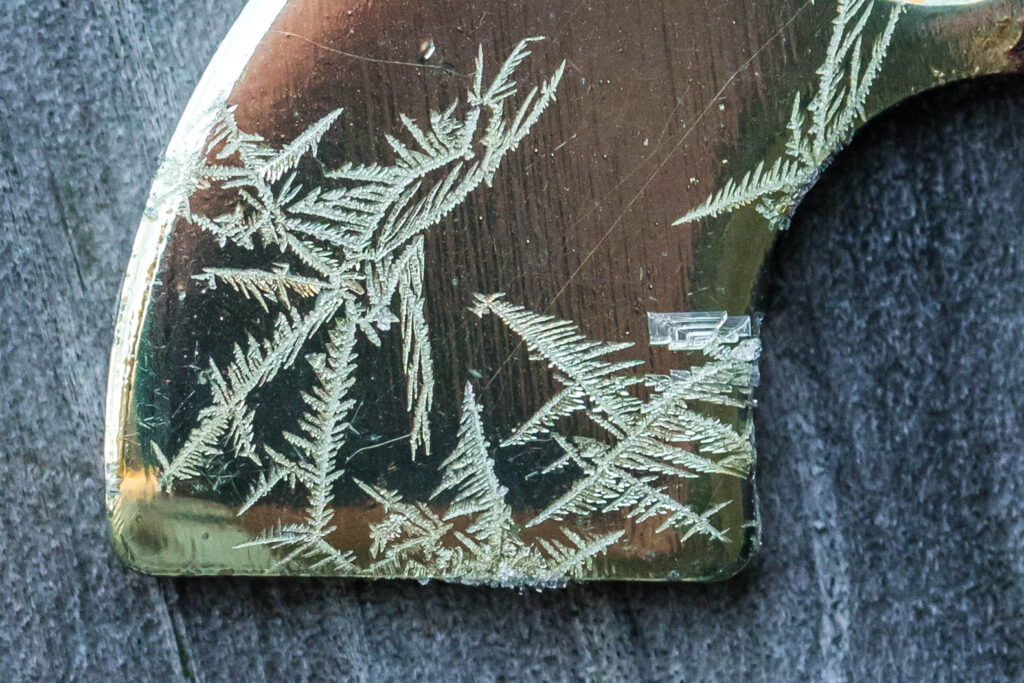
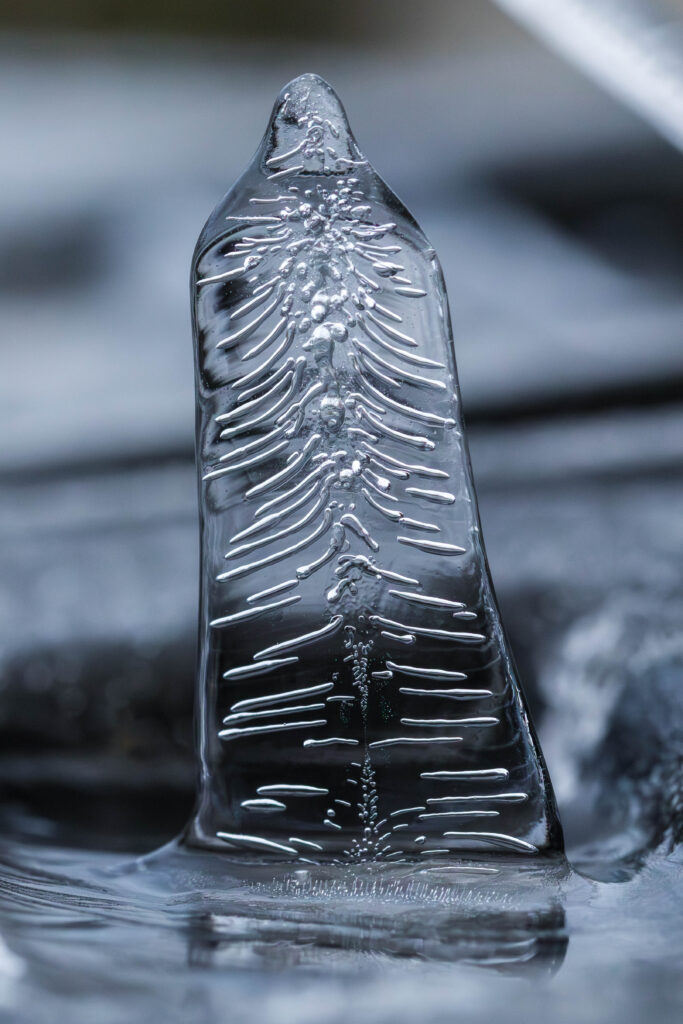
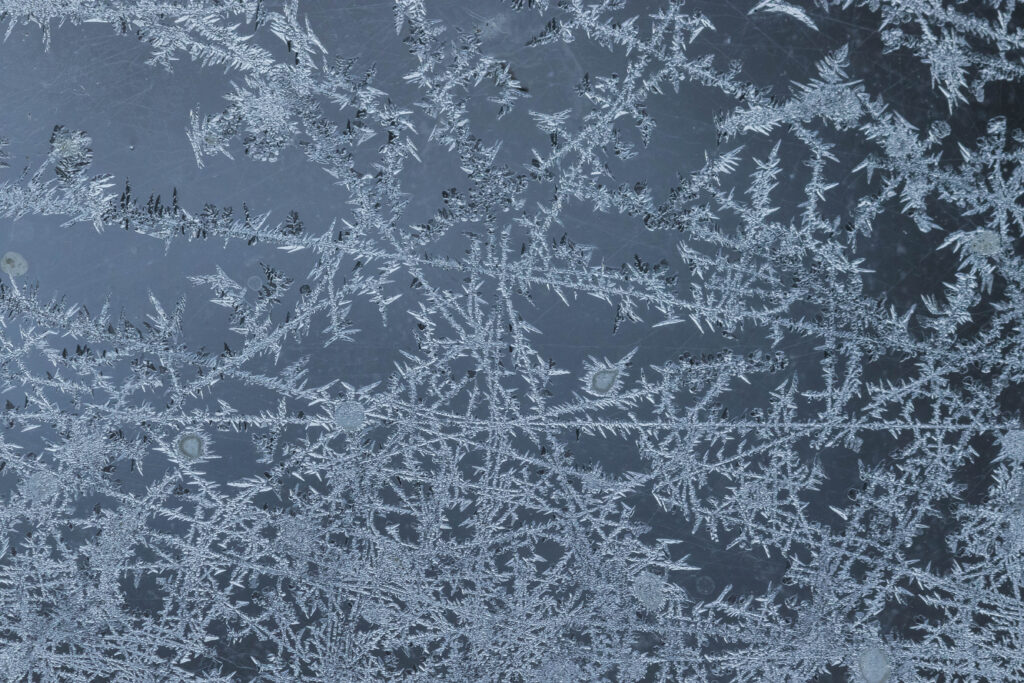
But winter need not be as dramatic as a snow or ice storm to add beauty to the world. Frost on an old garage window has been a lovely greeting to many of my early morning commutes. Every instance of crystal formation is different, surprising, and ephemeral. Only rarely, when time and conditions for frost coincided, have I been able to catch those crystalized panes through my lens. Whether I capture the glory or not (mostly not) witnessing it is always a gift. There are different forms of frost, each one forming under different conditions and each worth the effort to view. Most of that effort involves early rising and decent outerwear. If you’re of a mind, catch a snowflake and look at it under magnification – a marvelous creation of mother nature. Wilson Alywn Bentley spent his life doing just that and photographed over 5,000 unique examples of snowflakes. His photographs are exhibited in museums throughout North America, serving as a powerful celebration of nature’s beauty.
There are other sights in winter that need nothing more than snow and wind. Together these two conditions can change a landscape by the hour. Drifts along the ridges of fields and roads form shifting artwork for travelers moving over them. Winter makes everything and nothing matter. All mistakes or tasks left undone are swamped in pearly froth and become just another drift to add to the undulating mounds of snow. The stems and branches that remain in the garden stand out more clearly against the white backdrop of snowbanks. The trees and bushesgather the snow around them and their skins, suddenly on display, shine bronze or black in the cold sunlight. Snow is an excellent insulator, protecting roots from freezing and consistent snow cover is ideal. I encourage drifting by leaving non diseased plant material to overwinter in the garden. Cut evergreens boughs spread around vulnerable plants such as roses and crocosmia provide extra insulation and places for snow to gather. A further benefit comes with the spring thaw when melting snow replenishes the water table while providing nitrogen, carbon dioxide, and trace minerals to the soil.
Perhaps best of all, winter is a time of rest, for the garden and gardener alike. I relish the time of inactivity, of nestling in and cozying up. The long winter evenings invite us to take a seat after supper, sit with a book or project, or maybe a cat and a nap. Winter gives us the moments to restore the reserves of strength (both physical and mental) that the year’s activities have sapped. In those moments of quiet rest, winter gives us a spectacle to behold.
When the time for nestling in is done, your local Horticultural Society is there to help fill the time. Regular meetings are back in full swing with an exciting roster for 2026 scheduled. Members are ready to put hands to earth beginning in February with the annual Seed Exchange, happening an hour before the general meeting. Our guest speaker is David Gascoigne with “Urban Birds” as his topic.
Come as a guest, stay as a member.
February 3, 2026, 7:30pm
Tillsonburg Senior’s Centre
Membership: $25/year $5/meeting
Seed Exchange 6:30pm – 7:30pm