By Sue Healey, Tillsonburg Horticultural Society
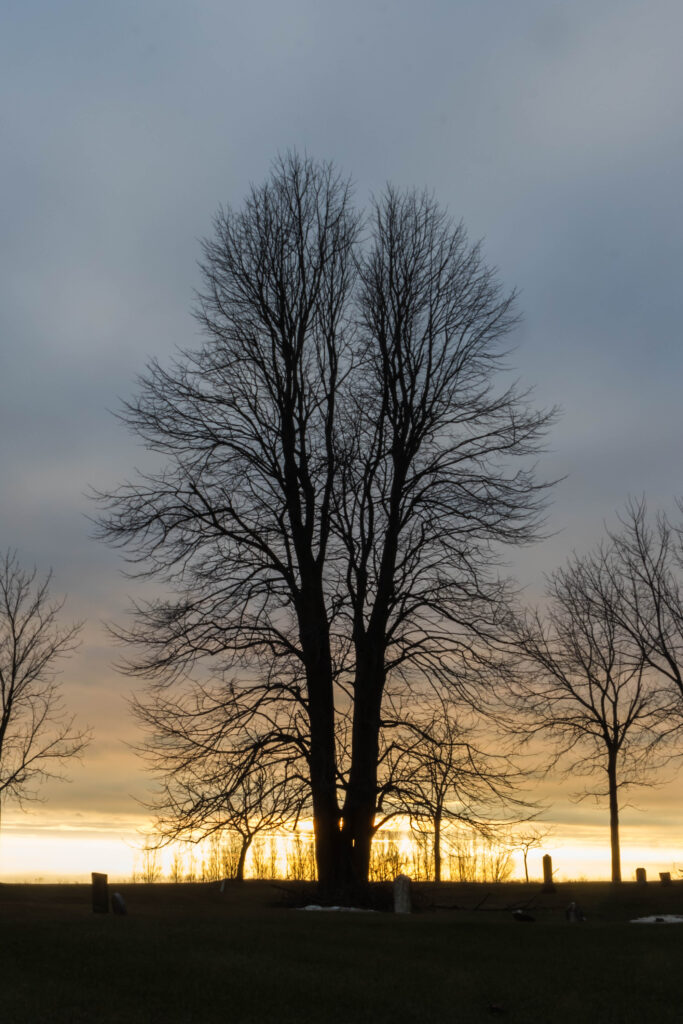
As we enter the tail end of the year, saying goodbye to the gold and blue days of October, November can seem bare and bleak, drained of colour and life. But November has its own austere beauty and can be refreshingly sparse. Stripped of the froth of the growing season, the landscape is pared down to its essence, simple but powerful. What remains becomes more important. And what remain are trees. Even as we move into winter here in the northern hemisphere, trees continue to add their beauty to our surroundings. They provide highlights and backdrops, texture, and colour. All while providing refuge and food to native wildlife. While deciduous trees may lose their leaves and the evergreens clasp theirs ever closer, trees play a vital role in the winter landscape.
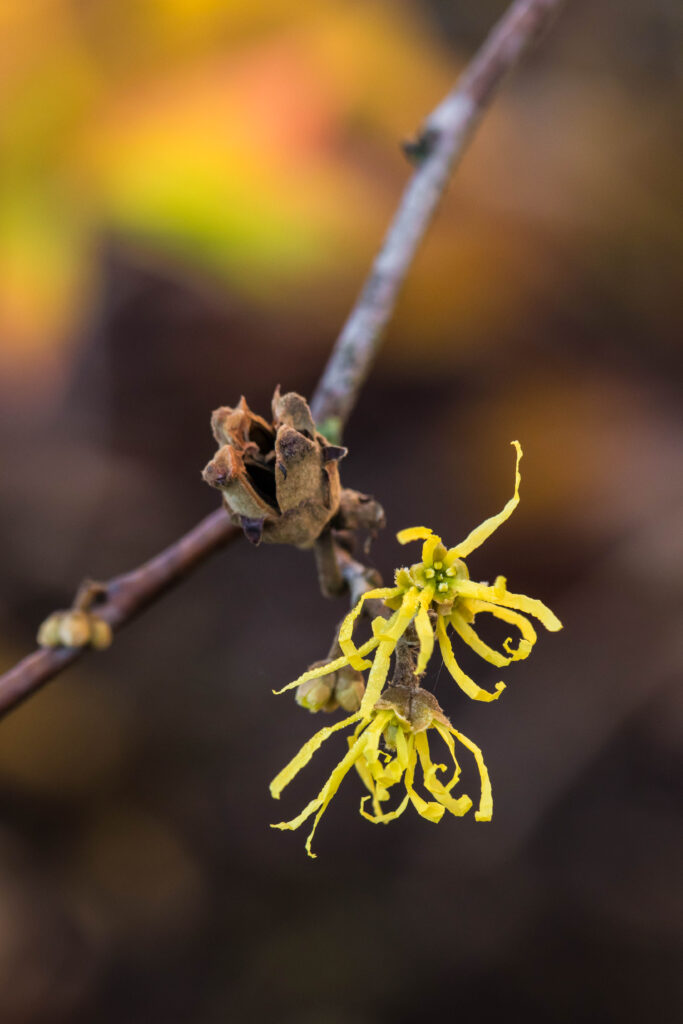
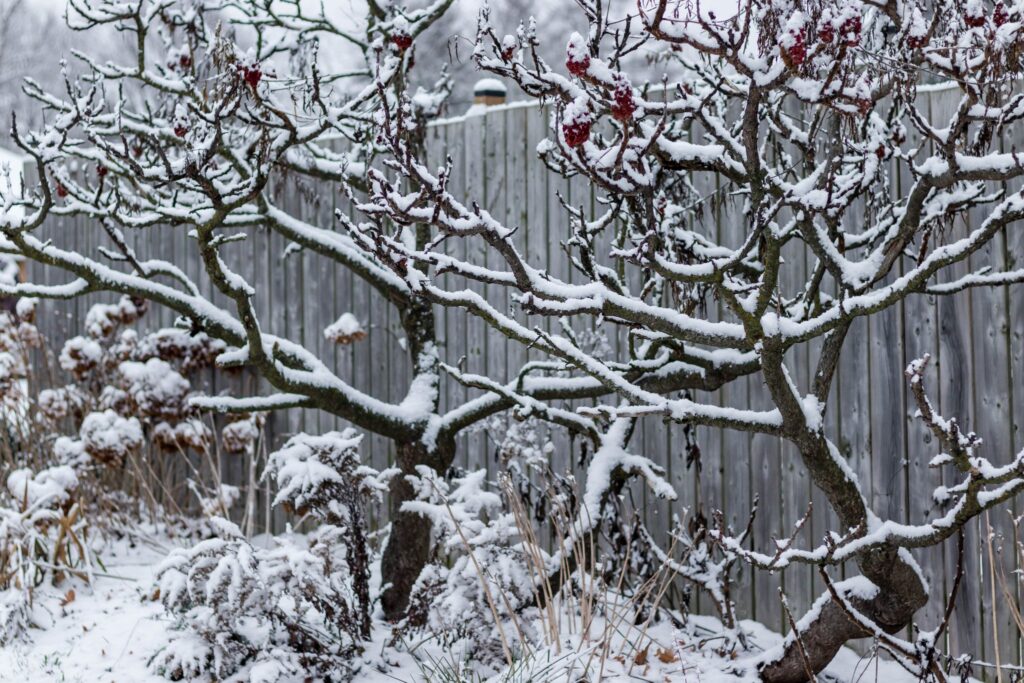
My own small, suburban garden is home to a variety of trees, some inherited and others introduced. A mix of evergreens and deciduous varieties including yews, boxwood and spruce, dogwood and maple provide year-round colour and interest to the garden while also creating a habitat for local birdlife. Each year, a twenty-year-old Witch Hazel (Hamamelis virginiana) heralds the arrival of November. This small, multi stemmed tree is native to North America and one of the few to bloom in autumn. From Halloween to the first snow, bright yellow blossoms, petals like crimped party streamers, perfume the air with their slightly astringent scent. Beaked seed capsules persist for a year or more and provide an important food source for smaller birds such as chickadees and sparrows. In the quiet garden, our dogwood (Cornus florida) has already left behind flower, fruit and flaming leaf. That would be enough for one small tree, but she has a final gift to see us through the winter. Silver haired, tightly wrapped buds – next years blooms, adorn branch tips all winter until they swell and finally break in the spring to begin the cycle again. The grey checkered bark makes a striking contrast against smooth white snowbanks. The Redbud (Cercis canadensis) too, her dark arching branches held up to the sky, her leaves strewn at her feet like age old valentines paints a dramatic portrait. While over the fence, Staghorn Sumac (Rhus typhina) stands proudly bare since early October. Its multi-branched limbs, covered in brown velvet and red cone-shaped fruit clusters are the highlight of the winter garden. Colony forming to many metres wide, Sumac can be grown in smaller gardens if suckers are removed consistently. Beautiful structure, striking fall foliage and winter interest make the effort well worthwhile. Another fine example of good tree structure anchors our front shrub bed. Here the Pagoda dogwood (Cornus alternifolia) spreads its considerable girth to stunning effect. With branches layered in flat, distinct levels, this small, multi stemmed tree makes a striking addition to the winter landscape. Spring flowers, blue-black summer fruit, and vivid red fall colour, along with great winter form makes this a four-season tree.
Of course, the deciduous trees wouldn’t pop without the supporting role of the evergreens. Yews, clothed in ancient green, are peppered with juicy red berries from early autumn to spring. The fruit feeds the local wildlife throughout the winter, and the densely packed branches provide ideal shelter for birds of all sizes. Spruce in ghostly blue or prickly green are a backdrop all year but become even more important in winter once leaves have fallen. Golden thread-leaf cedar (Thuja) – defying the cold November rain and the snow beyond, makes the yellow garden glow. Regardless of type, cedar, juniper, and pine all add colour, texture, and form in the bare months of the year. Smaller sizes or slower growing varieties make them easy additions to our small spaces.
And when I want more variety than what’s to be found in my yard, I don’t have to search far. My local trail, park, or conservation area teams with life and beauty. There I find elephant-skinned Beeches and Oaks with limbs that stretch to meters. Kinked Kentucky coffee trees line our rural roads, sweeping pines and ancient, twisted cedars fill our local forests. There is bark and branch to discover in these lean days of November – a closer look is all that is needed.
Trees provide homes for more than wildlife; they can host other plants as well. Orchids, being epiphytes, make their homes in trees in their native habitat. Learn more orchid facts at the Tillsonburg Horticulture Society’s November meeting. Join us for featured speaker Catherine McInerney of the London Orchid Society, “What’s so special about Orchids?”
Tuesday, November 4, 2025, 7:30pm
Tillsonburg Senior’s Centre
2026 Membership: $25/year $5/meeting. Come as a guest, stay as a member.
📷Sue